
Automate Canton Network Development with Daml Autopilot
ChainSafe's DAML Autopilot features 3,600+ compiler-validated patterns, built-in safety checks, and CI automation to streamline DAML smart contract development.

Today, we are announcing a complete overhaul of the Canton Network development workflow.
ChainSafe is proud to launch Daml Autopilot, a tool that includes the first Model Context Protocol (MCP) server for the Canton Network, including CI automations to kickstart app development.
With built-in safety and compliance verification, Daml Autopilot acts as both a safety layer and an automated creation platform for any Daml smart contract project. Our assistant is grounded in 3,600+ verified canonical patterns from Canton Network to ensure your code is sound.
Canton's brand-new development workflow
For developers new to Daml or the Canton ecosystem, the learning curve is steep.
Canton Network's environment requires developers to be both code specialists and compliance experts simultaneously, a challenging (and often error-prone) balancing act.
ChainSafe has designed a dynamic context layer that sits directly between your Daml smart contracts and the Canton Network. LLMs alone are not intelligent by design. They are extremely good at completing patterns, but lack the guardrails to prevent probabilistic guesses from becoming production liabilities.
Daml Autopilot grounds every suggestion in compiler-validated patterns, not statistical hunches. It handles the complexity and surfaces potential issues early, so your team can focus on core business logic.
How the Daml Autopilot MCP Server works
- AI-powered Daml development assistant with progressive context building.
- Access 3,600+ verified canonical patterns with semantic similarity search.
- MCP Server for LLM-based authorization model extraction and code analysis.
Most AI coding assistants rely on probability-based guesses. In financial systems, “probably right” means “definitely vulnerable.” Daml Autopilot treats code generation like a manufacturing process. It enforces safety gates that require patterns to compile and contain safety annotations before recommending them to you.
Daml Autopilot uses an MCP server that connects directly to the Integrated Development Environment (IDE) of your choice (e.g. Cursor, Claude Code, etc). It’s grounded in a Daml-safe-by-construction philosophy, unlike generic LLMs.
Instead of hallucinating syntax, the MCP server leverages a library of 3,600+ compiler-validated patterns sourced directly from official Daml and Canton repositories and documentation.
Using Daml Autopilot is a seamless, chat-based experience, but under the hood, the MCP Server includes two unique tools that assist in code development:
Daml Reason & Daml Automator.
Daml Reason
Daml Reason handles all pattern recognition, authorization model analysis, and safety reasoning. Daml Reason has built-in progressive context building, meaning it constantly updates its knowledge base from the latest versions of the Canton and Daml documentation.
Daml Reason ensures minimal hallucinations. It only analyzes what it actually sees, providing a safety layer that catches authorization errors and compliance issues, helping your developers catch issues before code review.
Daml Automator
Daml Automator guides developers through environments, CI/CD, and builds. Daml Automator is the component that creates and executes the code in local test environments before finalizing and pushing it.
Client-side orchestration enables developers to monitor code development in progress, keeping them in control of their work. No surprises, just instructions.
When you ask for help, the server executes a rigorous safety process:
- Pattern Matching: It searches established patterns for asset swaps, bonds, or options.
- Logic Validation: It runs
validate_daml_business_logicto check your code against compiler-validated structures. - Security Extraction: It utilizes
debug_authorization_failureto analyze why a transaction failed, providing fixes based on Daml’s internal authorization model. It will not rely on random guesses.
We do not guarantee the accuracy, reliability, or production-readiness of the code. You are the pilot. This is the Autopilot.
How CI Automation Works
- Production-ready GitHub Actions for Daml and Canton CI workflows
- Eliminate manual setup with one-line installations
- Automate testing with Daml Sandbox environments
As a bonus, we are also providing CI Automations for those of you who work in a standalone capacity.
CI Automation eliminates the manual labour of installing Daml or Canton SDKs and configuring sandbox nodes for every new contributor. Instead, replace the tedious setup time with GitHub Actions that automatically standardize your pipeline.
Skip the pain. Drop these workflows into your repository and get automated Daml testing, builds, and sandbox environments on every push.
CI Automation does not require the Daml Autopilot MCP server. Together, though, they provide the best Daml development experience possible. Perfect for teams who want fast CI/CD without the steep learning curve.
Pricing
The Daml Autopilot MCP Server uses x402 micropayments in Canton Coin to cover operational costs (API calls, cloud infrastructure, blockchain transaction fees). You're paying for the infrastructure that processes your requests, not for code quality, accuracy, or reliability.
Fund your Canton Coin wallet, connect it when prompted, and you're ready to go. Each request costs a fraction of a cent, so even heavy usage is affordable.
The code analysis service is provided as-is without warranty. All generated code must be independently reviewed. See our Terms of Service for details.
Become a Daml power-user
Upgrade your Canton workflow. Instantly integrate Daml Autopilot to add a context-aware safety layer to your local environment. Accelerate your learning curve, automate your first round of safety checks, and start shipping faster.
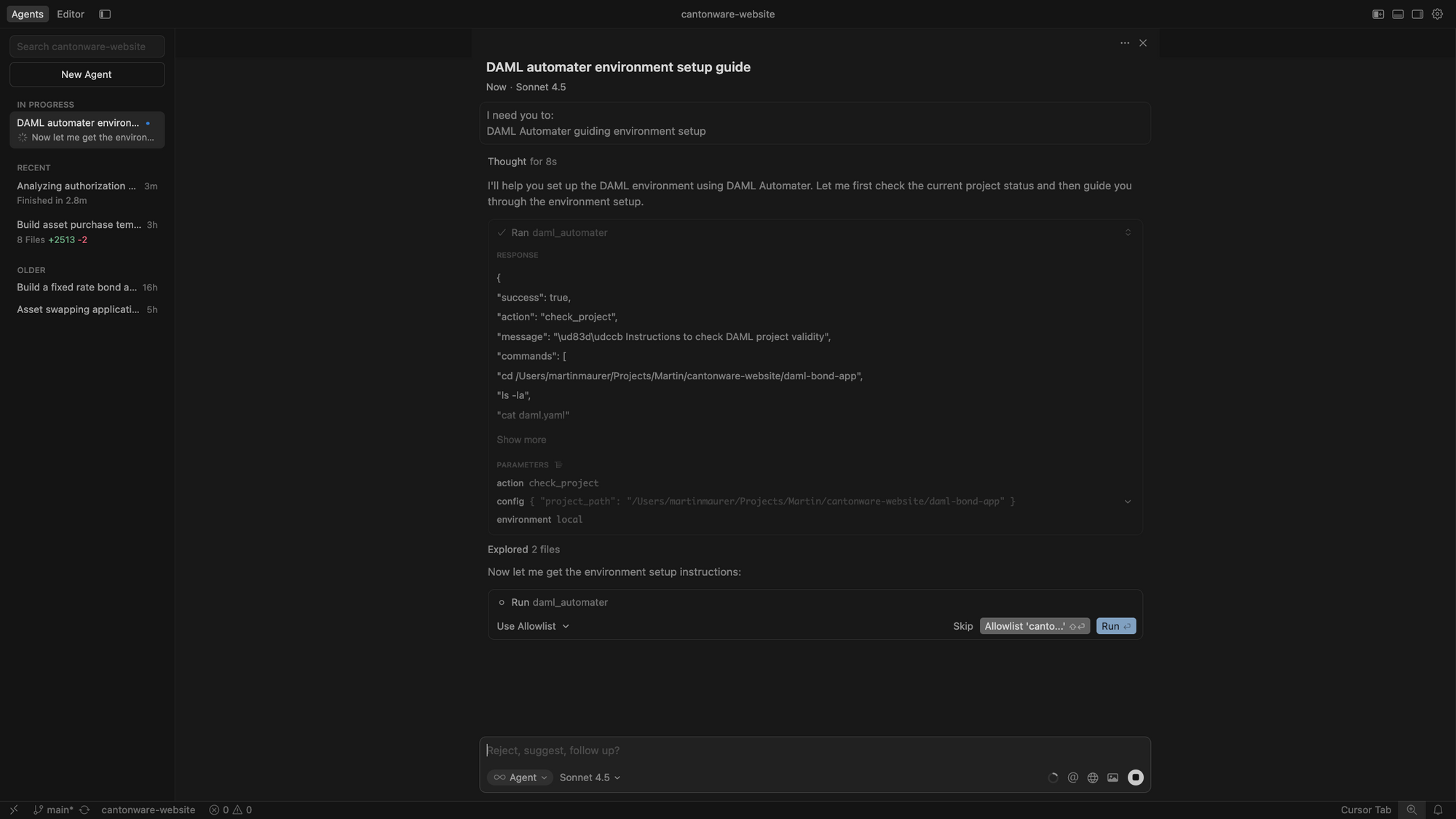
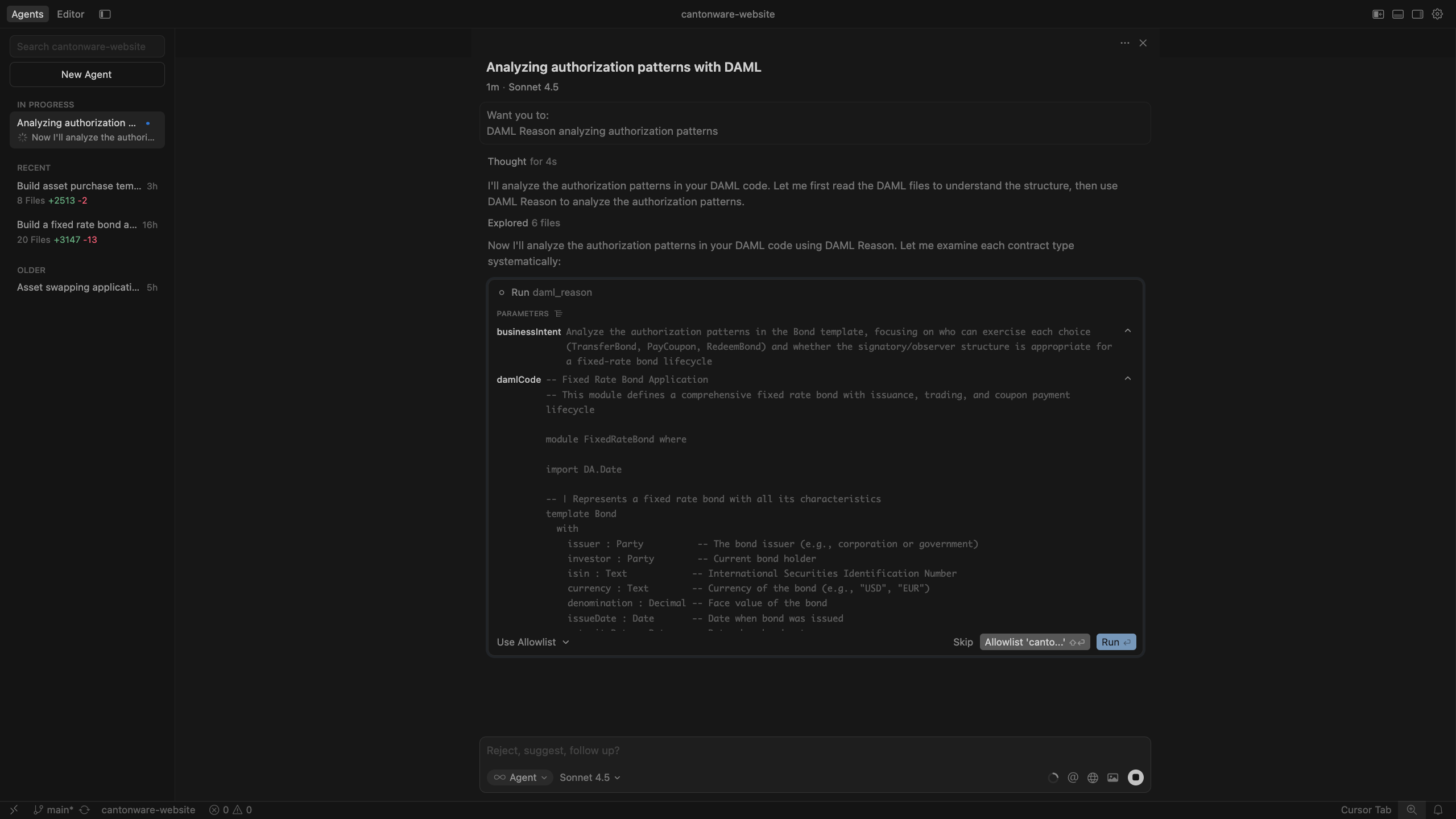
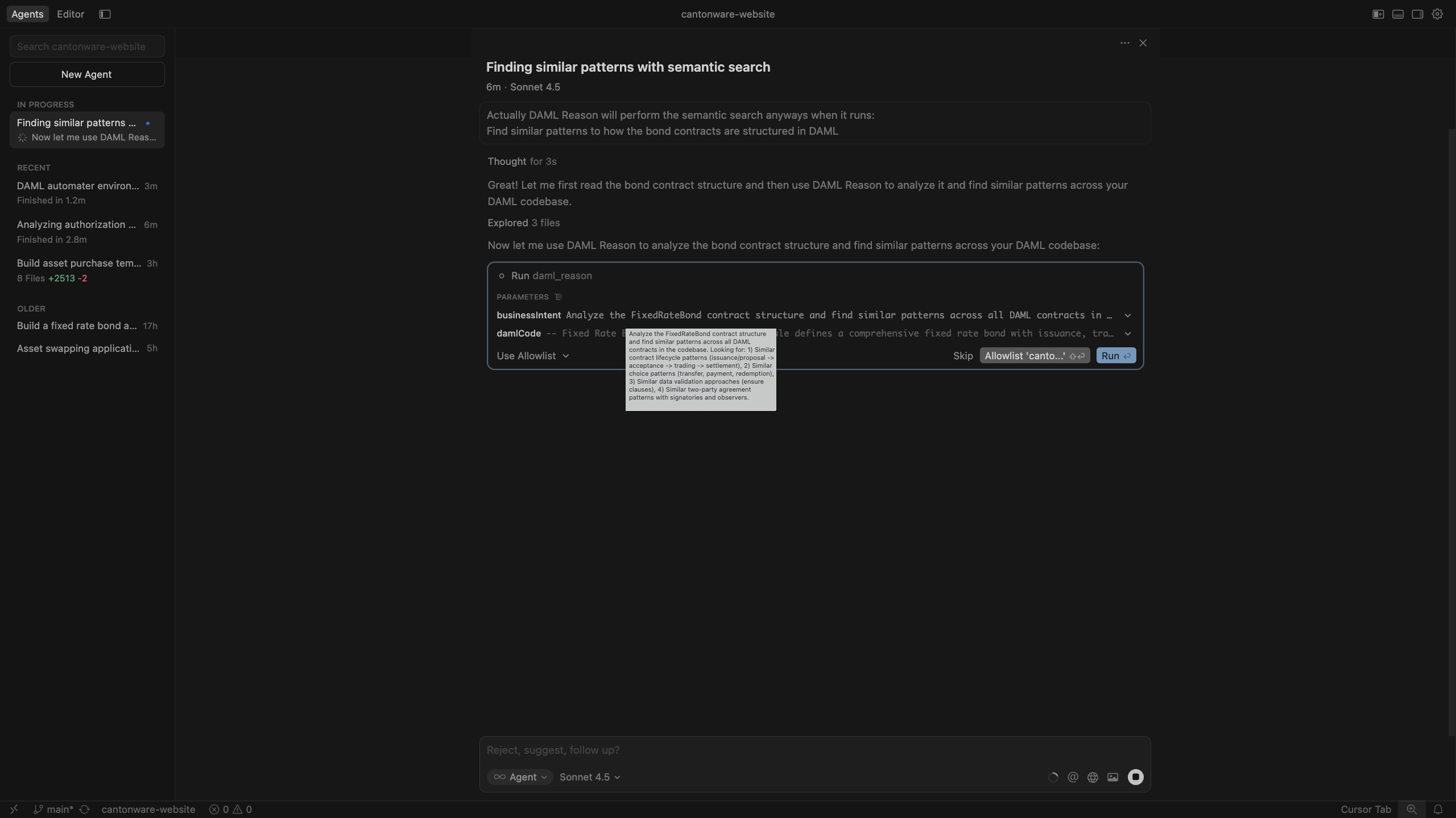
Daml Autopilot in action. Left to right: Daml automator guiding environment setup; Analyzing authorization patterns; Finding similar patterns with semantic search.

About ChainSafe
ChainSafe is a leading blockchain research and development firm specializing in protocol engineering, infrastructure development & operations, and co-development.
Alongside its contributions to major ecosystems such as Ethereum, Polkadot, Filecoin, and more, ChainSafe creates solutions for developers and teams across web3.
As part of its mission to build accessible and improved tooling for developers, ChainSafe embodies an open source and community-guided ethos to advance the future of the internet.